

ShareID
0
ShareID offers real-time, on-demand verification of user identities through a reusable digital identity solution that links to government-issued IDs.
Promote this Tool
Update this Tool
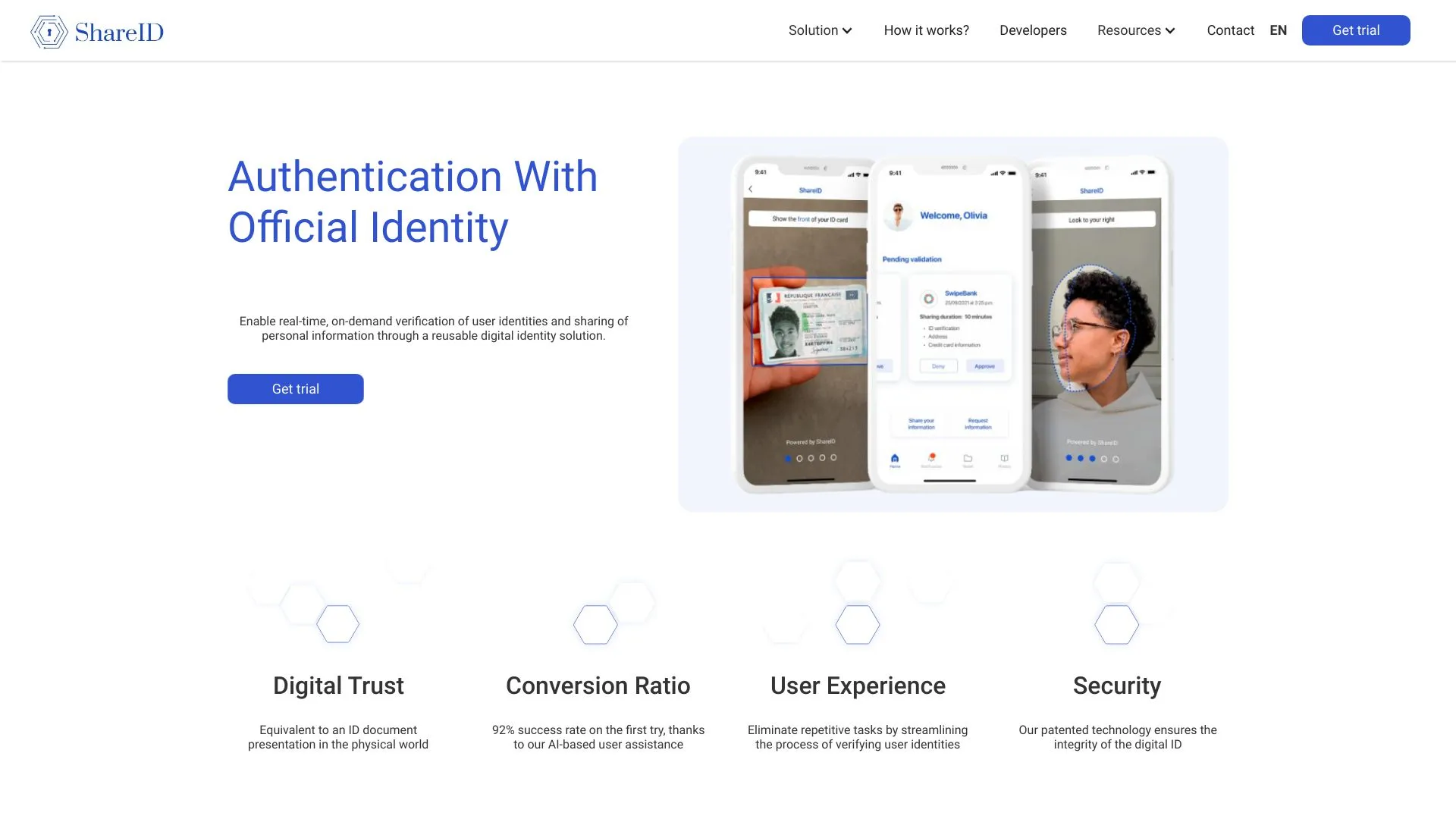
ShareID offers real-time, on-demand verification of user identities through a reusable digital identity solution that links to government-issued IDs.
Ads
What is ShareID?
ShareID is an Authentication-as-a-Service solution tied to government-issued IDs. It utilizes AI and Machine Learning for secure, real-time verification of user identities. By capturing both the user's ID document and facial recognition, ShareID ensures seamless and accurate authentication. The platform is designed to enhance security, reduce fraud, and streamline user onboarding processes. It is especially beneficial for businesses requiring strict verification protocols and efficient customer identity management.
Who will use ShareID?
- Businesses
- Financial institutions
- E-commerce websites
- Healthcare providers
- Educational institutions
How to use the ShareID?
- Step1: Visit the ShareID website and sign up for an account.
- Step2: Integrate ShareID's API into your platform or application.
- Step3: Capture the user's government-issued ID and facial recognition through the platform.
- Step4: Allow ShareID to verify the user's identity in real-time.
- Step5: Receive verification results and proceed accordingly.
Platform
- Web
ShareID's Core Features & Benefits
The Pros
High accuracy with 99.9% precision in document authentication.
Strong fraud detection with AI-powered biometric and document verification.
User privacy protected by not storing personal or biometric data.
Customizable authentication scenarios to fit different business needs.
Partnership with authoritative bodies enhances trust and expertise.
Supports regulatory compliance such as GDPR, DSP3, and eIDAS.
Reusable digital identities facilitate seamless re-authentication.
The Cons
No open-source code or public GitHub repository available.
No publicly available mobile or browser app links detected.
Potential dependency on AI models may require ongoing tuning and updates.
| Has free plan | No |
|---|---|
| Free trial details | |
| Pricing model | |
| Is credit card required | No |
| Paid from | |
| Has lifetime plan | No |
| Billing frequency |
Analytic of ShareID
Visit Over Time
Monthly Visits
1.2K
Avg Visit Duration
00:00:25
Page Per Visit
1.63
Bounce Rate
50.50%
Jul 2026 - Sep 2026 All Traffic
Geography
Top 2 Regions

Brazil
57.84%
France
42.16%
Jul 2026 - Sep 2026 Worldwide Desktop Only
Traffic Sources
Direct
40.68%
SearchOrganic
31.52%
Referrals
10.32%
SocialOrganic
5.71%
DisplayAds
3.09%
Mail
3.00%
Affiliate
1.82%
SearchPaid
1.60%
GenAi
1.54%
SocialPaid
0.71%
Sep 2026 Desktop Only
Top Keywords
| Keyword | Traffic | Cost Per Click |
|---|---|---|
| shareid | 590 | — |
| sharedid | 90 | — |
| sharedid meaning | — | — |
| share id | 940 | — |
| sheerid | 170.6k | $2.07 |
You may also like:
Haystack is an open-source framework for building AI-powered search systems and applications.
Humanize, rewrite, and create undetectable AI-generated content easily.
AI-powered crypto analysis tool with real-time insights for wise traders.
SocialTags is an advanced social media analytics tool for tracking and optimizing your social media performance.
Thread.genius automates Instagram Threads with AI-driven tools for scraping, commenting, and liking.
AI-powered tool for creating faceless, engaging videos for social media.
Optimize your TikTok content with intelligent tag recommendations.
AI Hug brings people closer through heartwarming photo embraces and captivating text-to-video transformations.
Optimize your Facebook connections effectively with Xooma Intelligence.