
- 無料で80語

Rewritify
0
Rewritifyは、文のパターンやトーン、表現を調整し、元の意味を保つことを目指しながら、AI生成の下書きを自然な文章に書き換えます。テキストを貼り付けるかファイルをアップロードし、書き換えモードを選択してワンクリックで処理できます。内蔵のAIチェッカーで検出結果を確認でき、多言語での書き換えにも対応しています。登録後は200語を無料で利用できます。
このツールを宣伝する
このツールを更新する
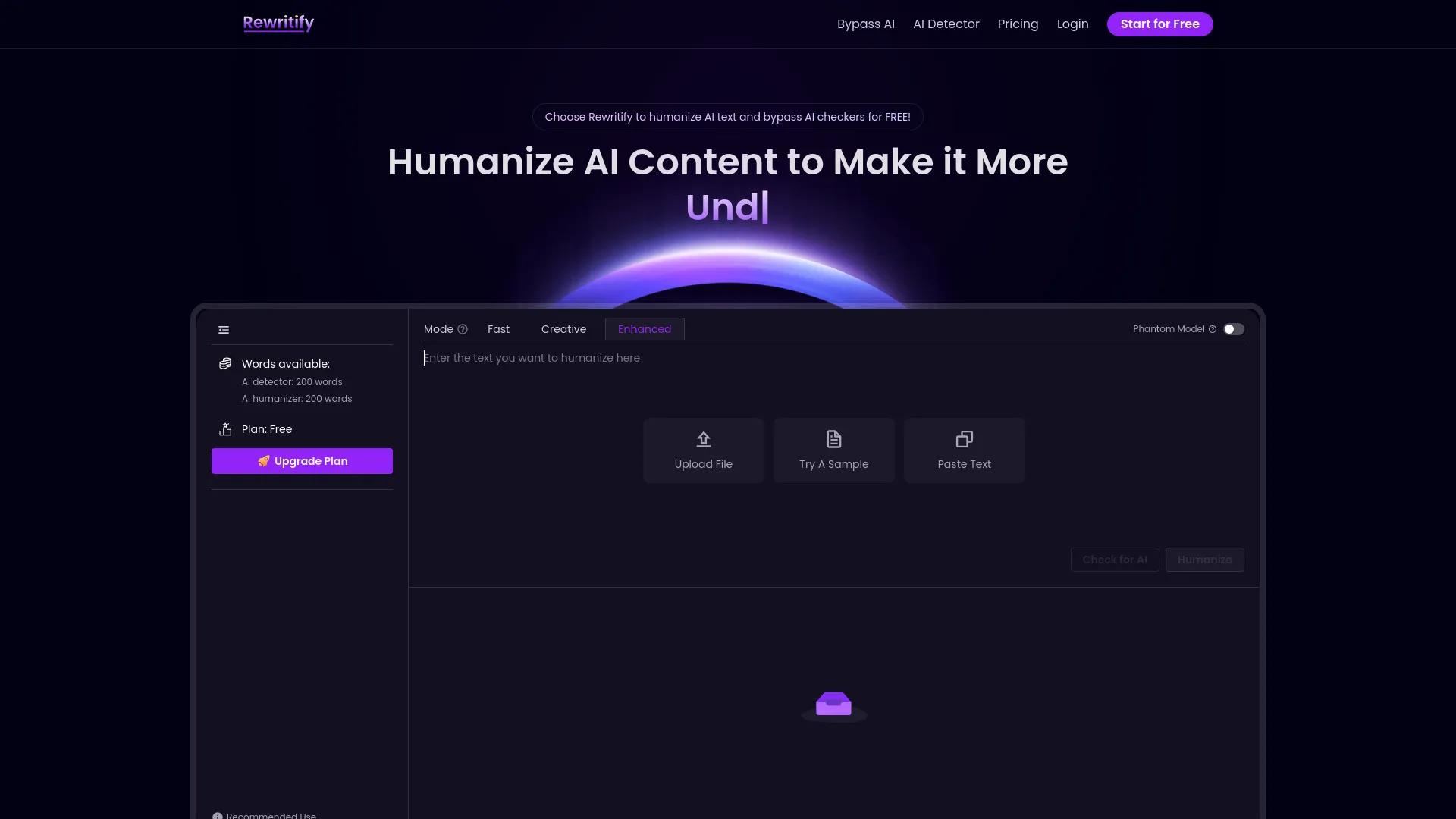
Rewritifyは、文のパターンやトーン、表現を調整し、元の意味を保つことを目指しながら、AI生成の下書きを自然な文章に書き換えます。テキストを貼り付けるかファイルをアップロードし、書き換えモードを選択してワンクリックで処理できます。内蔵のAIチェッカーで検出結果を確認でき、多言語での書き換えにも対応しています。登録後は200語を無料で利用できます。
広告
Rewritifyとは?
Rewritifyは、元の意味や重要な情報を保つことを目指しながら、AI生成テキストの表現や文体をより自然に書き換えます。エディターにテキストを貼り付けるかファイルをアップロードし、ワンクリックで人間らしい文章に整えられます。利用できるモードはFast、Creative、Enhanced、Humanizer 2.0です。また、テキストをチェックして検出結果を確認できるAI検出機能も備えており、GPTZeroやZeroGPTなどのツールにも言及しています。Rewritifyは30以上の言語での書き換えに対応すると説明していますが、FAQでは50以上とされています。ブログ記事、SNSの投稿文、SEOコンテンツ、商品説明などに適した出力を提供するとしています。無料アカウントには、文章の人間らしい書き換え200語分とAI検出200語分が含まれ、アップグレードすると利用枠が増えます。
誰がRewritifyを使うの?
- 作家・ブロガー
- 学生
- マーケティングチーム・代理店
- SEO担当者
- ジャーナリスト
- コピーライター
- EC事業者
Rewritifyの使い方は?
- ステップ1:Rewritifyに登録して無料の利用枠にアクセスします。
- ステップ2:AI生成テキストをエディターに貼り付けるか、ファイルをアップロードします。
- ステップ3:Fast、Creative、Enhanced、Humanizer 2.0などの書き換えモードを選択します。
- ステップ4:文章を人間らしく整える処理を実行し、書き換え版を受け取ります。
- ステップ5:書き換え後のテキストを確認し、内蔵AIチェッカーで検出結果をチェックします。
プラットフォーム
- Web
Rewritifyの主な特長・利点
コア機能
- AI生成テキストをより自然な文章に書き換え
- テキストの貼り付けとファイルのアップロードに対応
- Fast、Creative、Enhanced、Humanizer 2.0の各モードを提供
- AIテキスト検出機能を搭載
- 多言語のテキスト書き換えに対応
利点
- AIを使った下書きをより自然な文章に仕上げる
- 文体やトーンを変えながら重要な情報やキーワードを保つのに役立つ
- 書き換えとあわせて検出結果を確認できる
- 書き換えツールと検出ツールを試せる無料利用枠を提供
Rewritifyの主な使用ケース・アプリケーション
- AI生成のブログ記事や記事本文を人間らしい文章に整える
- SNSの投稿文やマーケティングコピーを書き直す
- AIを活用した学術文書の下書きを編集する
- キーワードを保ちながらSEOコンテンツのトーンを改善する
- EC商品の説明文を書き換える
- 書き換えた文章がAI生成として検出されるか確認する
Rewritify の長所と短所
長所
テキストの書き換えと内蔵AI検出機能を組み合わせています。
テキストの貼り付けとファイルのアップロードに対応しています。
複数の書き換えモードと多言語対応を提供しています。
文章の人間らしい書き換えに200語分、AI検出に200語分の無料利用枠があります。
短所
人間らしい書き換えと検出機能は、それぞれ無料利用枠が200語に限られています。
追加で利用するには有料プランへのアップグレードが必要です。
ブラウザー上で動作する製品で、ネイティブのデスクトップアプリやモバイルアプリは掲載されていません。
Rewritify の価格設定
| 無料プランあり | YES |
|---|---|
| 無料体験の詳細 | |
| 料金モデル | freemium |
| クレジットカードが必要か | No |
| 支払い開始 | 14 USD |
| 生涯プランあり | No |
| 請求頻度 | monthly/yearly |
料金プランの詳細
Free
0 USDBasic
14 USD- 月5,000語
- 1回の入力につき最大3,000語を人間らしく書き換え
- AIコンテンツ検出
- 複数の回避モード
- 30以上の言語に対応
Ultimate
24 USD- 月50,000語
- 1回の入力につき最大3,000語を人間らしく書き換え
- AIコンテンツ検出
- 複数の回避モード
- 30以上の言語に対応
- 元の意味を保持
- 読みやすさと明瞭さを向上
Unlimited
49 USD- 月間の語数無制限
- 1回の入力につき語数無制限
- AIコンテンツ検出
- 複数の回避モード
- 30以上の言語に対応
- 元の意味を保持
- 読みやすさと明瞭さを向上
割引:年払いの場合、有料プランが最大67%お得になります。
最新の価格については、こちらをご覧ください: https://rewritify.ai/pricingRewritifyのFAQs
Rewritify会社情報
- ウェブサイト:
- 会社名: Rewritify.ai
- サポートメール:
- Facebook:
- X(Twitter):
- YouTube:
- Instagram:
- Tiktok:
- LinkedIn:
Rewritifyの分析
時間ごとの訪問
月間訪問数
115.9K
平均訪問時間
00:00:26
訪問あたりのページ数
1.63
直帰率
44.65%
Jul 2026 - Sep 2026 のすべてのトラフィック
地理情報
トップ5地域

United States
10.67%
Philippines
9.89%
Australia
6.05%
Colombia
5.64%
Peru
5.13%
Jul 2026 - Sep 2026 世界中のデスクトップのみ
トラフィックソース
SearchOrganic
67.55%
Direct
25.64%
Referrals
1.70%
GenAi
1.64%
DisplayAds
1.36%
SocialOrganic
1.21%
SearchPaid
0.47%
SocialPaid
0.43%
Sep 2026 デスクトップのみ
トップキーワード
| キーワード | トラフィック | クリック単価 |
|---|---|---|
| rewritify | 13.3k | $0.44 |
| undetectable ai | 107.5k | — |
| humanizer | 751.9k | $0.68 |
| rewritify ai | 3.7k | $0.90 |
| rewrite ai | 14.7k | $2.18 |
Rewritify のレビュー
5/5
コメント (1)

lab top
June 13 2025
The pre-analytics step should meet high ethical requirements of particularly sample quality as well as patient rights. Properly identifying specimens, obtaining informed consent for testing, and protecting patient privacy during specimen collection and transport are important. In the early dias the paramount task is preserving patient autonomy and not making errors that either cause the wrong diagnosis or render the treatment useless.
The need to maintain ethical standards and test accuracy is just as valid in the analysis process. This involves the adherence to the specific processes and procedures of the laboratory you are assigned to, you will be required to follow, ensuring the accuracy and reliability of the substances and methods used and participate in proficiency testing and quality control measures. In this regard, for laboratory staff members, transparency regarding the test limitations and abstaining from behaviors that may compromise the trustworthiness of the test are key ethical principles.
Ethics should be considered in the accompanying post-analytic phase, to maintain patient data confidentiality, reporting of the results in a timely and accurate fashion, and to provide health professionals with an accurate interpretation and orientation. It is also important to safely keep and dispose biological samples and patient records. In this last phase of the laboratory workflow, the highest possible treatment for patients can only be ensured through open communication and collaboration with doctors, which is emphasized as the ethical tasks.
Rewritifyの主な競合と代替品は?
Copyleaks
Crossplag
GPTZero
Sapling
Writer
ZeroGPT
Originality.ai
あなたも好きかもしれません:
プロンプト、テンプレート、またはファイルを使ってレポート、提案書、ガイドの草稿を作成し、ページを編集してAIによる修正を依頼してからダウンロードできます。
ヒューマナイズ、リライト、そして検出されないAI生成コンテンツを簡単に作成します。